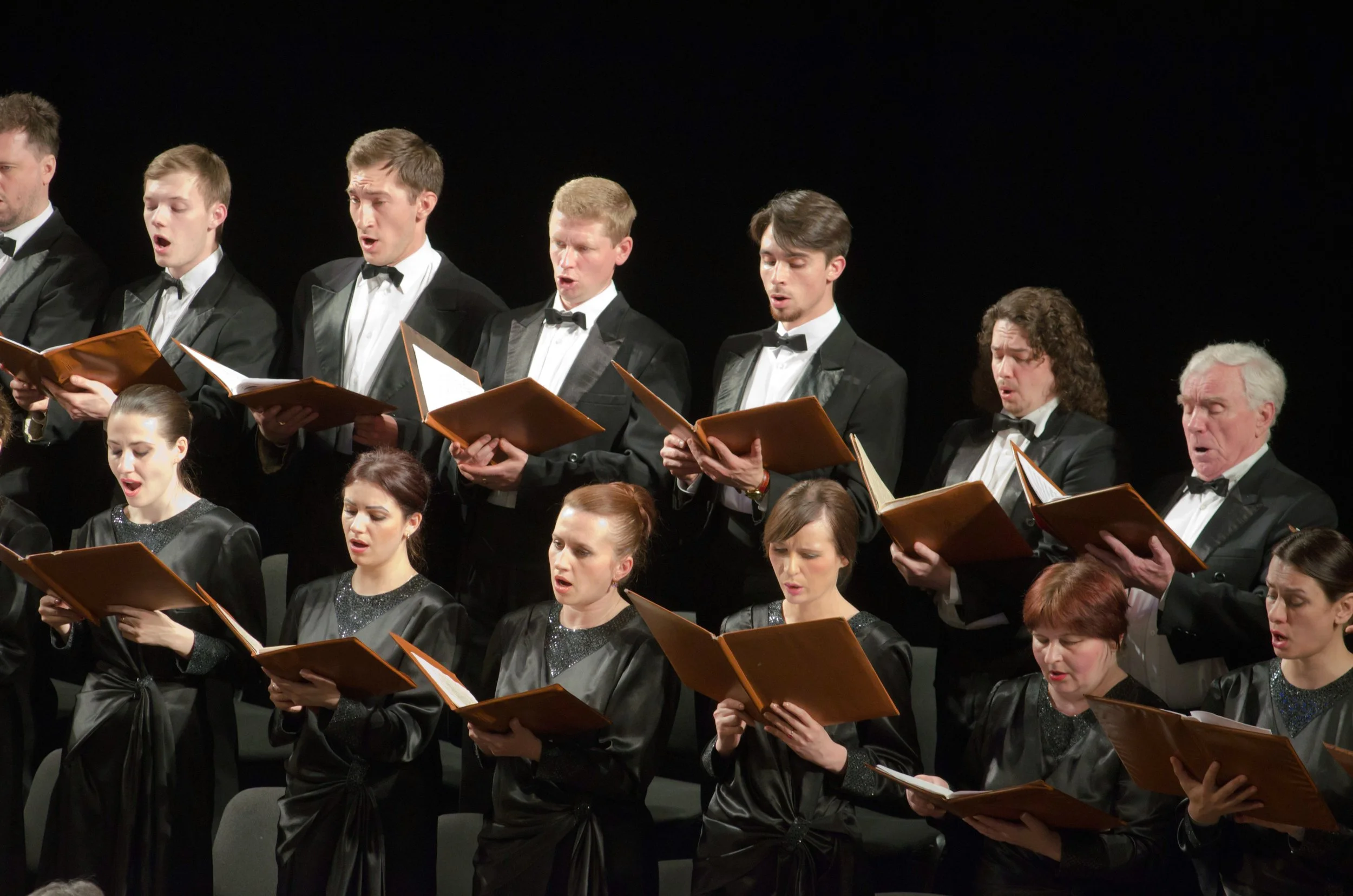
The Growing Voice: Collegiate Voice Students and the Large Ensemble
Myers, M. (2026). The growing voice: collegiate voice students and the large ensemble. Choral Journal, 66 (8), 30-32.
https://acda-publications.s3.us-east-2.amazonaws.com/CJ/May2026/CJMay2026.pdf
Differentiating choral instruction at the collegiate level. What does that look like for you?
-
Overview
In this article, Matthew Myers discusses how the choral ensemble can impact the vocal lives of the singers involved, both for music majors and non-majors. While the makeup of the choir can change from year to year or even semester to semester, the director's role is to understand their singers' needs, whether they are beginners or advanced, and to determine how to move forward by creating opportunities that allow their students to grow in all aspects of music education.
-
Summary
The author outlines the challenges of working with a large ensemble. One is the concept of a stable voice type for young voice students, and the other is achieving a uniform level of projection within the choir when working with differing levels of experience. To make the ensemble experience beneficial for all, Myers suggests that prioritizing music literacy in choir is vital to students’ ability to learn their music efficiently, and that we can teach the music in a streamlined manner that promotes retention and reduces the need for copious additional memorization practice.
-
So What?
The ideas presented in this article clearly reflect what differentiating instruction looks like in a collegiate choral setting and can be applied to all ensembles (vocal or instrumental) at various levels.
-
Derrick's Riff
As a collegiate choral director who works with both small and large ensembles and singers at various levels, I continue to think about what differentiated instruction looks like for my singers. I have noticed recently that more students are entering my ensembles with strong voices but limited music-reading skills. While I’m usually preparing and pushing forward from concert to concert, I have to find ways to reach my students and build those skills, whether they're beginners or advanced. While those skills come from the repertoire chosen and the way I present the work to them, I also have to be flexible and creative in my delivery so every learner can connect with the music-making experience. Here, Myers offers just a glimpse into what this can look like for directors and how we can push and improve our choral sound, with a more structured growth experience for our singers.